An underground storm shelter puts you below grade, out of the wind entirely
An underground storm shelter puts the occupants beneath the ground surface, where wind speed is not a factor and flying debris cannot reach except through the lid. That is the appeal, and it is real. For a lot of central Arkansas households it is also the option that feels right instinctively — there is a long regional memory of storm cellars.
The engineering reality is more balanced than the instinct. A modern above-ground safe room tested to the same standard offers protection described under FEMA P-361 as near-absolute, so the decision between them is not really about safety margin. It is about your lot, your soil, your water table and who has to get down the steps.
The Arkansas water table question, answered honestly
Central Arkansas is not an easy place to bury a box. Rainfall is heavy, the soils are clay-rich and hold water rather than shedding it, and the water table sits high in places — noticeably so in the river-bottom ground around Maumelle and the low areas near the Arkansas River. A shelter dropped into a hole without regard for any of that will eventually take on water.
None of that rules underground out. It moves the decision to the site evaluation, where four things get established before a price is quoted:
- Elevation and drainage paths. Where water goes on your lot when it rains hard, and whether the shelter location is in that path.
- Soil composition. How much clay, how it behaves saturated, and how the backfill has to be handled.
- Groundwater level. Measured, not assumed — it varies substantially across the metro and by season.
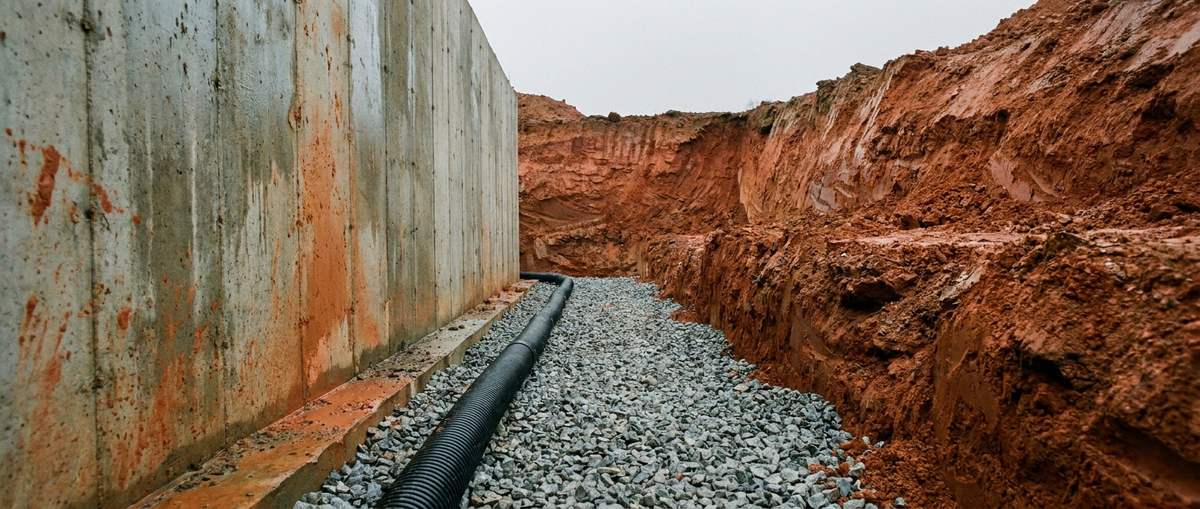
- Waterproofing and drainage design. Gravel bed, perforated drain, sealed penetrations and a gasketed lid, specified against what the first three found.
Concrete or steel storm shelters
Both are in use across central Arkansas and both can be rated to ICC-500 and FEMA P-361.
- Precast concrete. Heavy, inherently resistant to flotation when the water table rises, and very stable in clay. Needs access for a truck and a crane or boom to set it.
- Steel. Lighter and easier to place on a tight lot, and quick to install — but it must be properly coated and anchored, because a light box in saturated clay is the one that can shift or float if the drainage design is wrong.
Where the storm shelter goes on the lot
Back-yard placement is straightforward on most Pulaski and Saline county lots, but pay attention to the path from your back door to the lid. If the run is exposed and forty feet long, you will hesitate to use it at night in heavy rain — and a storm shelter you hesitate about is a storm shelter you do not reach in time. In-garage placement solves that at the cost of a slab cut and repour.
Utility locates come before any digging, without exception. Gas, water, sewer, electric and communications all get marked, and on newer subdivisions in Benton and Bryant there is often irrigation and low-voltage lighting that never appears on a locate ticket.
If stairs are a problem for anyone in the household, read the above-ground safe rooms page before deciding — access beats everything else.