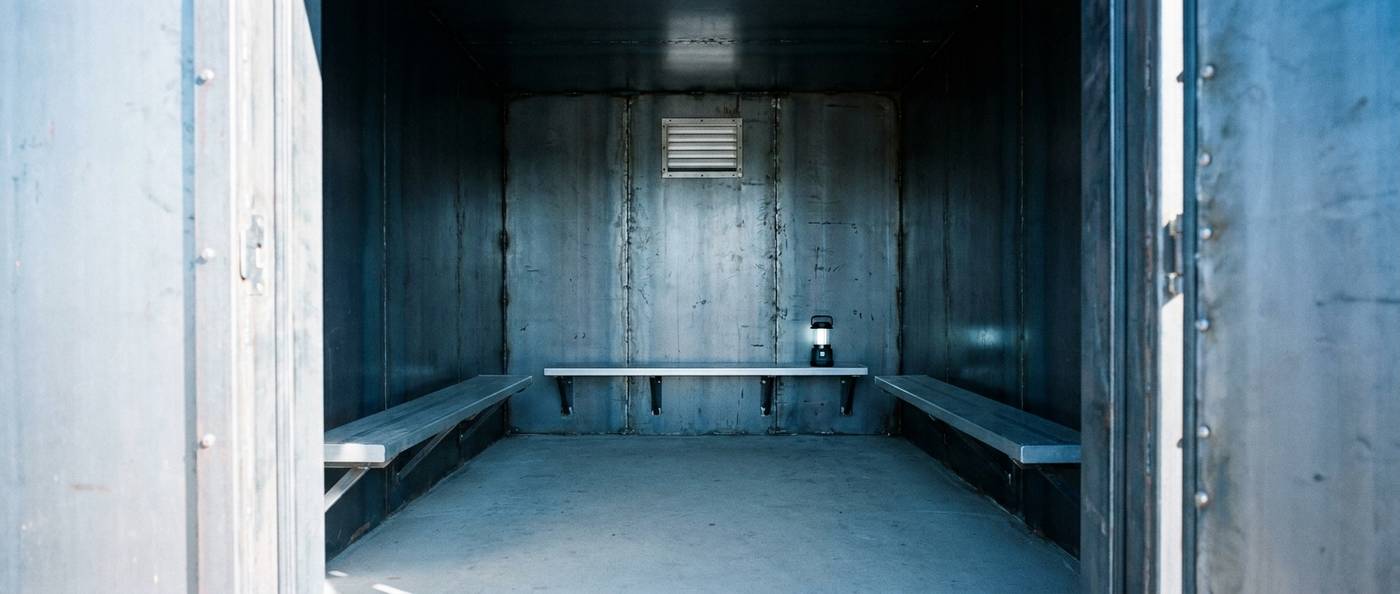
Above-ground safe rooms, underground shelters and in-garage units, installed across central Arkansas and rated for the worst a tornado can do.
Call (501) 234-0462Tell us where you want the shelter and how many people it needs to hold, and you will be matched with a central Arkansas installer for a free on-site quote. Call (501) 234-0462.
On 31 March 2023 a high-end EF3 tornado touched down about two miles west-northwest of the I-430 and I-630 interchange, stayed on the ground for just over 34 miles, crossed the Arkansas River into North Little Rock and did not lift until it was southeast of Cabot. Winds reached 165 mph. Nearly 600 structures took major damage and 54 people were injured. Walnut Valley was the worst-hit Little Rock neighborhood.
Nine years earlier, on 27 April 2014, an EF4 tracked 41.1 miles through Pulaski, Faulkner and White counties, reaching its maximum intensity in Faulkner County as it crossed Interstate 40 at Mayflower and tore through Vilonia. Sixteen people were killed and about 200 injured — the deadliest single tornado in Arkansas since 1968.
Neither of those was a freak event. Arkansas averages about 37 tornadoes a year, and the state has a two-peak season: roughly half arrive in March, April and May, and a genuine second peak comes in the cool season, with November the notable month. A storm shelter is the one thing you can add to a house that changes the outcome of the worst version of that.
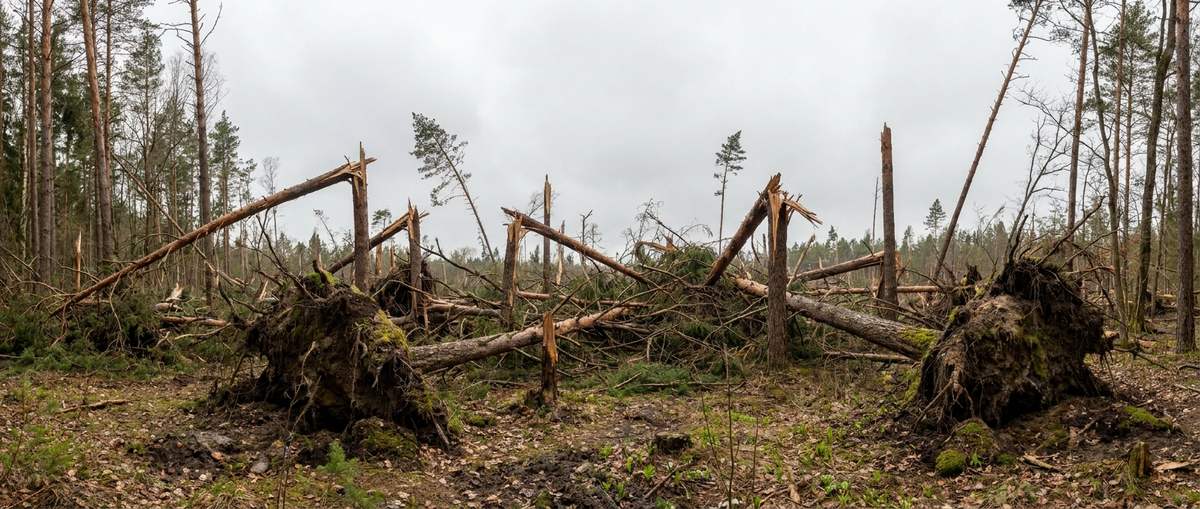
The standard advice — get to a basement — does not apply to most of this metro. Central Arkansas homes are overwhelmingly built slab-on-grade with no basement, so the fallback is an interior bathroom or a hall closet. That helps against a weak tornado. It does very little against an EF3 or EF4 that removes the roof and the walls around it, which is exactly what happened along both tracks above.
That is the gap a storm shelter fills. There are three practical ways to close it in a slab-built house, and they suit different budgets, different bodies and different lots.
Every shelter below is available EF5-rated to FEMA P-361 and ICC-500. Which one is right for your house comes down to who has to get into it, how fast, and what is under your slab.
Welded steel rooms bolted to your slab — no stairs, no digging, no water to worry about.
Above-Ground Safe Rooms →Concrete and steel units set below grade in the yard or under the garage floor.
Underground Storm Shelters →In-floor units you park straight over, and corner safe rooms that keep the bay clear.
Garage Storm Shelters →Site visit, permit, utility locate, install day and final walkthrough — step by step.
Storm Shelter Installation →What the ratings actually mean, and the documentation to demand before you buy.
FEMA-Rated & ICC-500 →Real 2026 price ranges by type and capacity, and what is quietly left out of a quote.
Storm Shelter Cost →Churches, schools, daycares, job sites and mobile-home parks — occupancy-rated shelters.
Commercial & Church Shelters →The honest answer on Arkansas rebates and tax credits, and what actually helps you pay.
Rebates & Financing →People assume underground is automatically safer. It is not — that is the single most common misconception in this category. A shelter tested to FEMA P-361 and ICC-500 is designed against the same 250 mph wind speed and the same missile-impact criteria whichever way it is installed. What actually differs is how you live with it.
Underground shelters are completely out of the wind and out of sight, and they stay cool. The trade-offs are stairs or a ladder, excavation on your lot, and drainage — central Arkansas has heavy rainfall, clay-rich soils and locally high water tables, so siting and waterproofing matter here more than they do in drier states. Above-ground safe rooms have no stairs, take about a day to install, are trivially easy to reach at 2 a.m. with children or a mobility aid, and never take on groundwater. They do occupy floor space, and they need a slab sound enough to anchor into.
The honest rule of thumb: if anyone in the household cannot do stairs quickly and unaided, an above-ground safe room is usually the right answer, and no amount of underground preference outweighs a shelter people cannot reach in ninety seconds.
A quote that only names a shelter model and a price is incomplete. Before you sign anything, the number in front of you should cover delivery and setting, anchoring or excavation and backfill, concrete cutting and repour where the install disturbs a slab, spoil haul-off, the permit, and the final inspection and walkthrough. Ask explicitly which of those are excluded — that is where surprise line items live.
Ask for documentation too. Any reputable storm shelter is backed by engineering drawings and debris-impact test results for the wall, door and shutter components. The door is the part that matters most and the part cheap shelters compromise on. In the 2014 Mayflower and Vilonia tornado, one of the sixteen deaths occurred in an above-ground shelter when a hard object struck the door and deformed it inward. That is not an argument against above-ground shelters — it is the argument for insisting on a tested door assembly and a manufacturer whose products are verified by the National Storm Shelter Association.
Installers reached through this site cover Little Rock and the surrounding metro, including North Little Rock, Conway, Benton, Bryant, Sherwood and Maumelle, plus Jacksonville and Cabot. See the full service area map.
Tell us the room, the household size and the lot. A central Arkansas installer will come out, measure, and price it properly — before the next watch box goes up.
(501) 234-0462Most central Arkansas homeowners land between roughly $3,500 and $9,000 for an above-ground safe room and roughly $6,000 to $15,000 for an underground unit installed, with small two-to-four person shelters starting lower and large or heavily customised builds running well past that. Capacity, shelter type, access to the site and how much concrete has to be cut and repoured move the number more than anything else. The storm shelter cost page breaks the ranges down by type and lists what quotes commonly leave out.
Both are safe when they are built and installed to the same standard. A shelter that meets FEMA P-361 and ICC-500 is tested to the same 250 mph design wind speed and the same debris-impact criteria whether it sits on your slab or under it. The real decision in Little Rock is practical: underground units are out of the wind entirely but involve stairs, excavation and drainage; above-ground safe rooms have no stairs and no water to manage but need floor space and a slab thick enough to anchor into.
It is a fair question here. Central Arkansas has heavy rainfall, dense clay soils and locally high water tables, and a poorly sited or poorly drained in-ground shelter can take on water. It is a siting and drainage problem, not a reason to rule underground out — elevation, distance from natural drainage paths, soil and groundwater level all get checked on the site visit, and the fix is proper waterproofing, a gravel bed, perforated drain and a sealed lid.
Yes, and in central Arkansas it is one of the most popular installs. The crew saw-cuts a rectangle out of the garage slab, excavates, sets the shelter, backfills and repours the concrete flush with the surrounding floor. You park straight over the lid and lose no square footage. Slab thickness, reinforcing and what runs under the slab all get checked first.
No. The Arkansas Shelter Rebate Program ended in 2016, and the Arkansas Division of Emergency Management states plainly that it does not offer state or federal financial assistance for installing individual shelters. A bill to create a state income tax credit for qualified storm shelters, HB1366, died in House committee at the close of the 2025 session. FEMA's HMGP and BRIC grant programs fund community projects, not residential shelters. Full detail, and what does genuinely help, is on the rebates and financing page.
It means the shelter is designed and tested to survive the wind speeds and flying debris associated with the most violent tornadoes — a 250 mph design wind speed under FEMA P-361, with wall, door and shutter components put through missile-impact testing. Be careful with the word certified: FEMA does not approve or certify shelter products, and the National Storm Shelter Association warns that a product should not claim to be FEMA approved. Ask for the engineering and impact-test documentation, and check whether the manufacturer is NSSA-verified.
The install itself is usually a single day for an above-ground safe room and one to two days for an in-ground or in-garage unit, plus curing time before you drive on a repoured garage slab. The longer part of the timeline is scheduling: demand spikes hard after a tornado and through the March-to-May peak, and lead times stretch. Autumn is the quiet window.
Arkansas averages about 37 tornadoes a year on the 1991–2020 thirty-year average, and the season has two peaks. Roughly half of all Arkansas tornadoes occur in March, April and May, and there is a genuine secondary cool-season peak in late autumn and early winter, with November the notable second month. That second season is the reason not to wait until spring to start looking.